
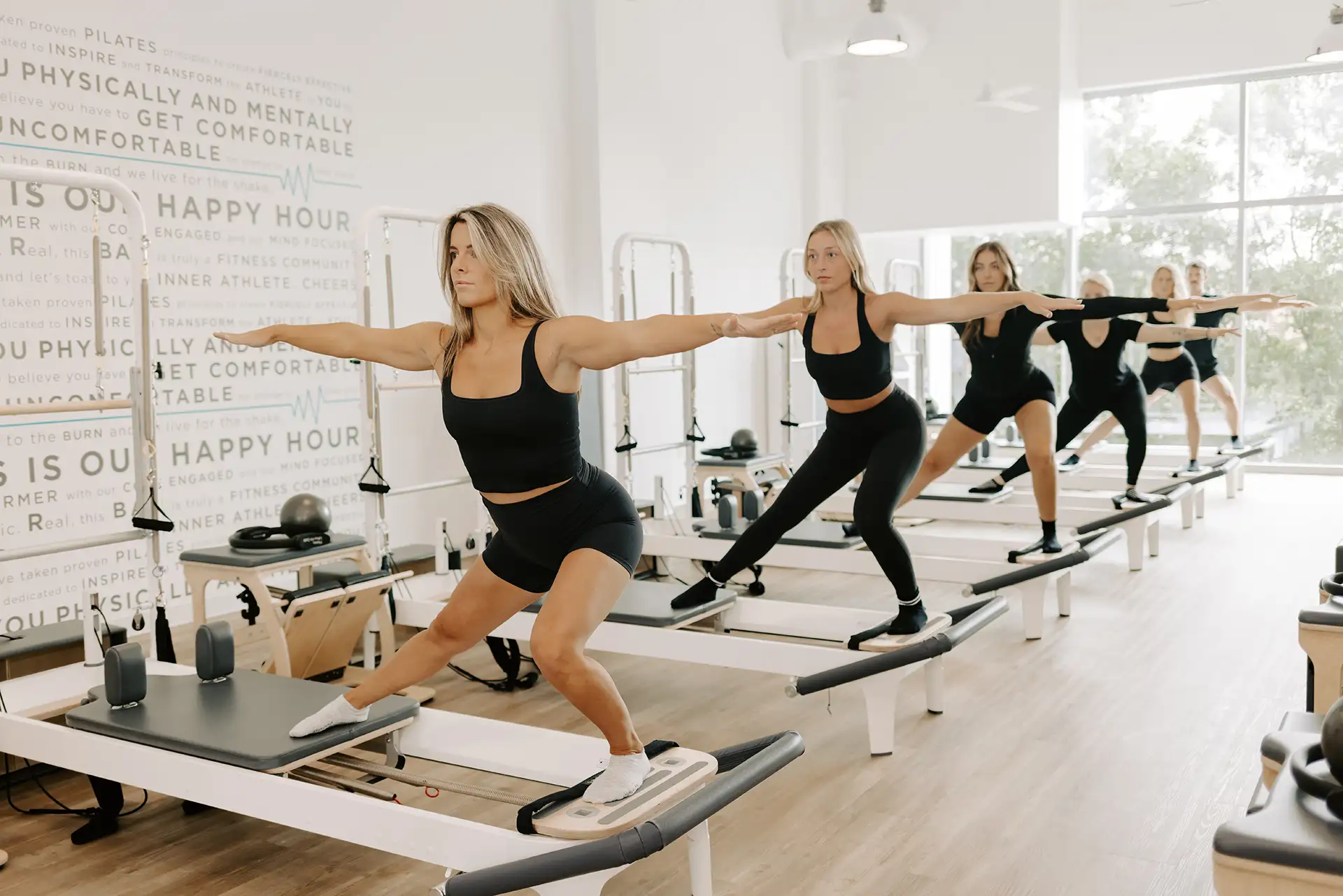
The first decision in reformer Pilates happens before you touch the equipment. Pick a class that gives you time to learn how the machine moves. A reformer has a sliding platform called a carriage. Springs provide resistance, and you may use straps or a footbar during class. Even if you know the movements from mat Pilates, it takes a few minutes to get used to a surface that moves with you. BODYBAR’s first-class guide
How do I choose a beginner class?
Look for a class description that mentions foundations, instruction or form. Then read what equipment the class uses. A reformer class, a jumpboard session and a tower class can all appear on the same Pilates schedule. For a first visit, look for a class that introduces the carriage and springs. Save the jumpboard session for a day when you want to explore that attachment. If the titles leave you guessing, ask the studio which session gives a new visitor the most time to learn transitions.
BODYBAR Cascade is one local option with enough detail to help you make that choice. Its Precision class focuses on technique and foundational movements. The studio explains that instructors guide visitors through the reformer, cue form and offer modifications. That makes it a reasonable choice if the most appealing part of Pilates for you is learning a movement carefully with someone there to help. BODYBAR Cascade class descriptions
What do I need to bring?
At Cascade, pack grip socks and comfortable clothes you can move in. Grip socks have textured soles that give your feet traction against the equipment. If you’re booking elsewhere, check that studio’s sock policy before buying a pair. Take a water bottle and give yourself enough time to change if you’re coming from work. Cascade first-visit instructions
When you choose a start time, count backward from check-in. Cascade asks you to arrive 10–15 minutes early for an introduction and setup. For a hypothetical 6 p.m. class, aim to be inside by 5:45. Tell the instructor if this is your first time on a reformer, even if you already lift weights, take barre or practice yoga. Those details help them decide what needs explaining when they introduce the equipment.
What happens once class starts?
A useful first question is “What should I feel moving here?” It gives the instructor something more specific to answer than “Am I doing this right?” You might understand how to place your feet but still be unsure how far the carriage should travel. Ask before changing equipment settings yourself. Once you’ve heard the cue and tried the movement, it’s easier to connect the unfamiliar vocabulary to what you just did.
If a transition goes by quickly, wait for the instructor to show you the setup. You can also ask for another way to do a movement. Cascade specifically includes modifications in its first-visit information, so you can raise that question before the session as well as during it. What to expect at BODYBAR
After class, ask the instructor which session they’d suggest for your second visit and why. If you liked the precision of the work, repeating a foundations class gives you familiar cues to build on. If you were drawn to a different format on the timetable, you now have someone who has seen you on the equipment and can explain what changes in that class. Explore BODYBAR Pilates Cascade on Ignited